
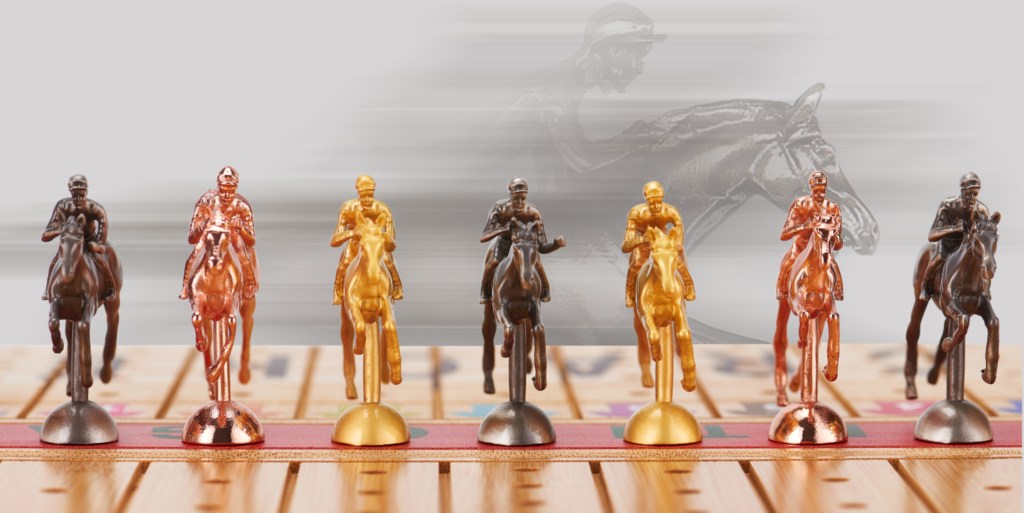
Game Introduction
The game itself doesn’t require any existing knowledge of horse racing, and it’s absolutely possible to play and enjoy the horse racing game as a complete newcomer to the sport.
However, learning a little bit about where horse racing came from and how it works in the real world certainly adds an extra dimension to the board game. The gambling aspect of horse racing is both socially and economically significant – part of the fun for most spectators is placing bets on whichever horse they think will win. Part of the horse racing game’s success can undoubtedly be attributed to its use of a kind of gambling.
Setup Game
Preparing the Board
- First of all, place the racing track on a table with enough space for the dice to be rolled nearby.
- Take the deck of playing cards and remove the kings, aces, and jokers. Shuffle the forty-four cards that are left and deal them out between the players.
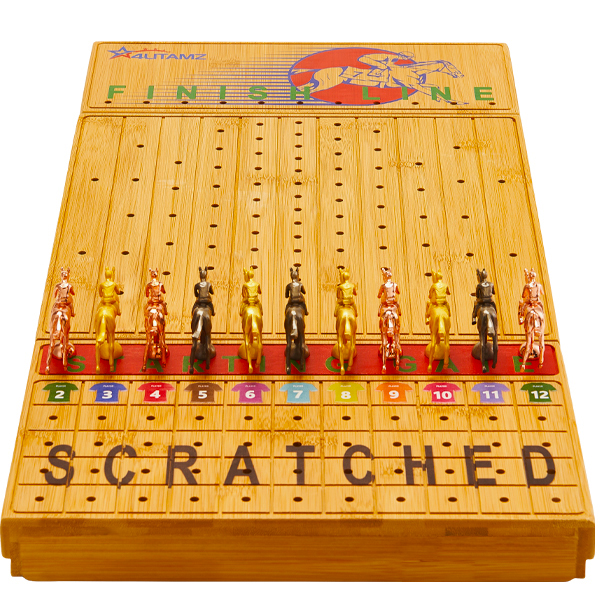
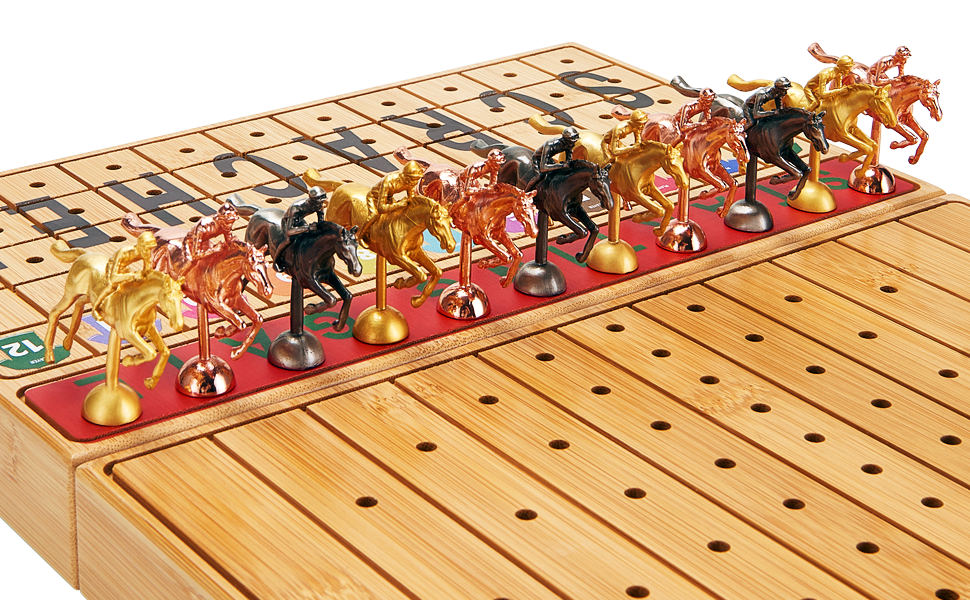
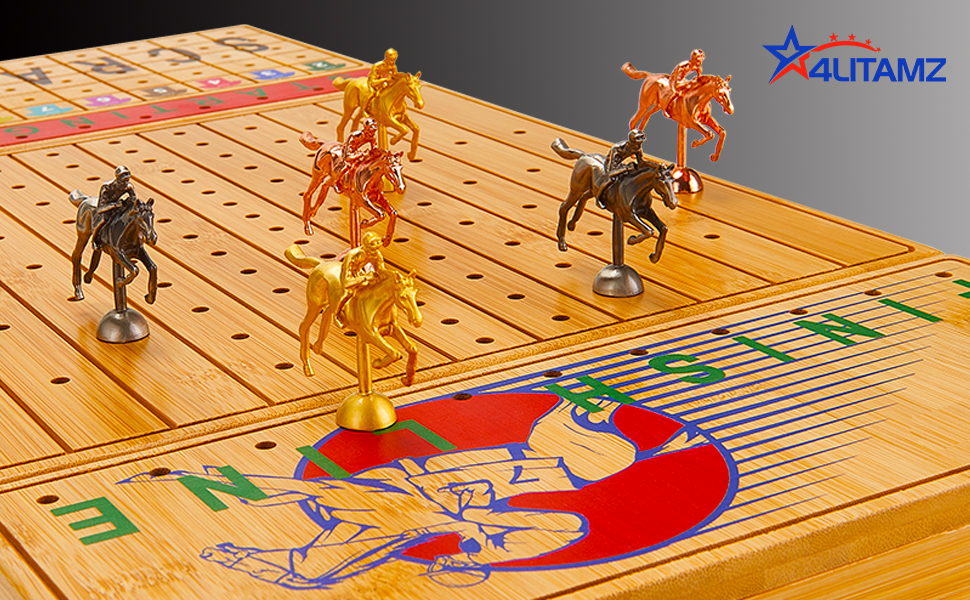
- Next, place all horses at the starting gate.
- Decide on a currency for your game. You might want to play using poker chips or ten-cent coins, for example. These will be used to build up the “pot” during the game.
Scratching the Horses
- To anyone who’s unfamiliar with the world of horse racing, “scratching the horses” probably sounds like a strange expression, but all this means is that some horses need to be eliminated from the race.
- The player to the left of the dealer rolls the dice.
- The numbers on the dice should be added together, and the total tells you which horse is going to be scratched.
- Move the corresponding horseback to the first line; it won’t be involved in the race.
- All players should check their cards. If they have a card with the number of the horse that has been scratched on it, then they should discard it.
- Players who had to discard a card should also pay one chip/coin into the game pot.
Repeat this process until four horses have been scratched from the race.
Play Game
Taking a Turn
- Roll the dice and add up the total score
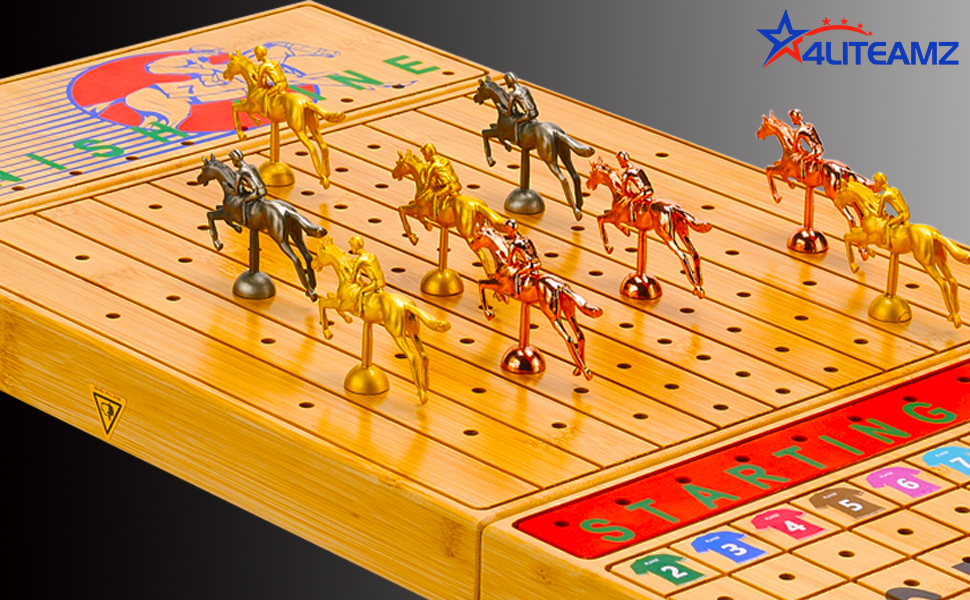
- Move the corresponding horse forward one position
- If their score is the same as one of the horses that has been scratched, the player should pay one chip or coin into the pot.
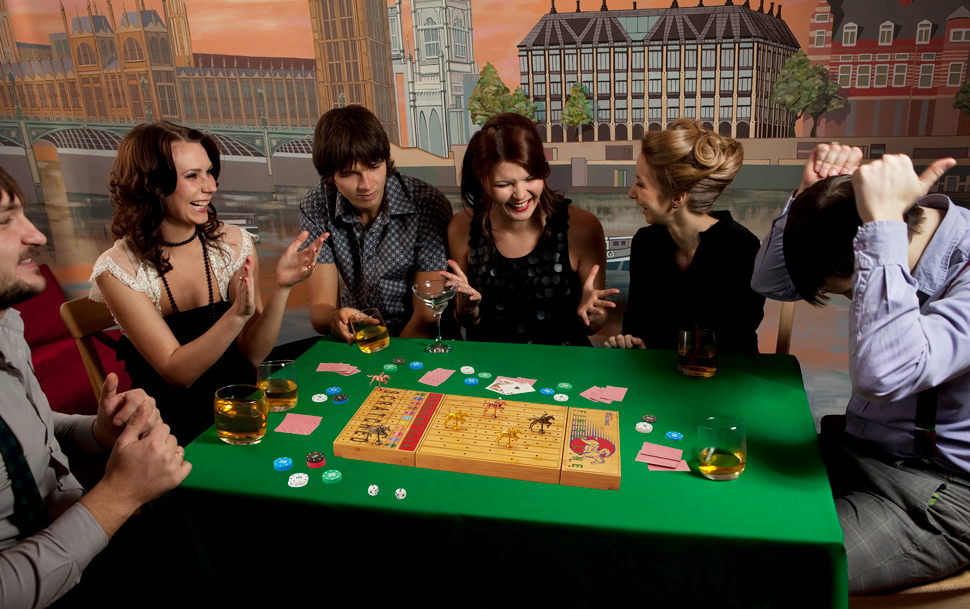
- Play continues clockwise with a horse moving forward, or a chip is added to the pot each time until one of the horses reaches the finish line.
Scratching the Horses
- For example, imagine that horse number eight crosses the finish line first. All players who have an eight in their hand win.
- This is where you have a decision to make because there are actually two different options here in terms of how to play.
- You might decide to just play one race, in which case the pot should be split equally between all players who had the winning card (continuing with our example, all players who had an eight).
- However, if you’re competitive and you don’t like sharing a win – or for that matter, you just want the game to last longer – you can play eight rounds to decide the overall winner.
- To do this, repeat the process described above, keeping track of who wins each race. Again, it’s a good idea to keep some kind of collaborative score sheet, so there are no disagreements about how many races have been won by each player.
- Throughout the eight rounds, the pot will continue to grow, adding to the stakes – especially if you’re playing with real money. After the eighth race, count up each player’s wins – the person with the highest number gets the pot. If there is a tie, you could run one more race or decide to split it.
Storage
Packed in a box
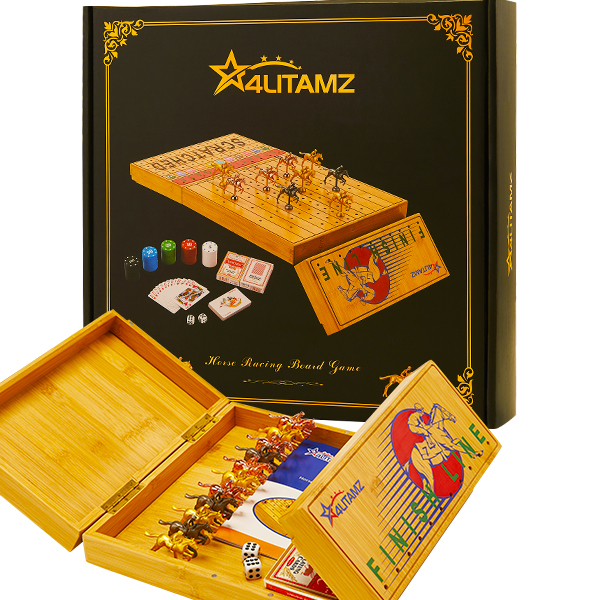
- The board is divided into three sections. The board can be folded and formed into a compact box, secured by magnet to ensure it stays together.
- Pack all accessories in the board game in a box
 4litamz.com